18 September 2026 · Academics
Six medals at the regional science olympiad
Our Class X and 11 teams returned from Pune with three golds, two silvers and a bronze — the school's strongest showing since 2018.
A Tradition of Excellence
जय श्री कृष्ण
“We do not prepare children for examinations. We prepare them for the twenty years that follow — and we are unembarrassed about how demanding that is.”
Junior Gurukul was founded on a straightforward conviction: that rigour and warmth are not opposites. A school can hold a child to a very high standard and still know their name, their siblings, and the subject that keeps them up at night.
Three decades on, that conviction is visible in our classrooms of twenty-eight, in a faculty who stay an average of nine years, and in graduates who write to us long after they have stopped needing to.
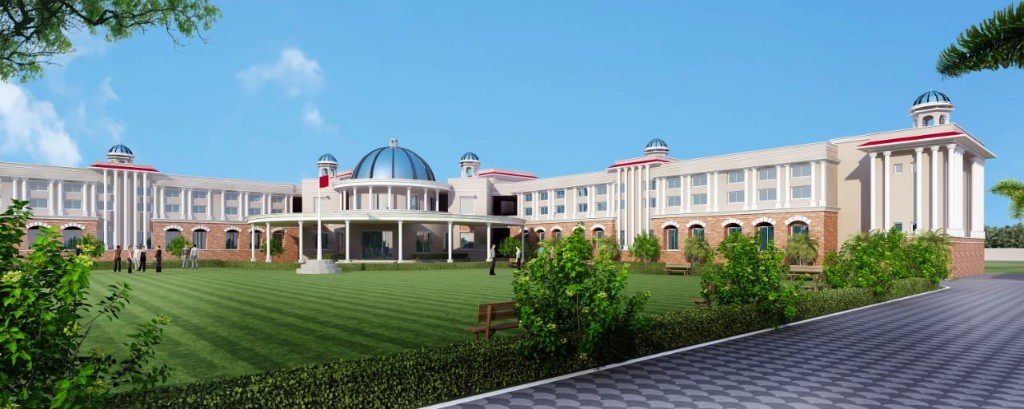
Foundations laid slowly and properly. Inquiry-led literacy and numeracy, a second language from the first term, and an hour outdoors every day — because attention is built, not demanded.
The years of range. Ten disciplines taught by specialists, the first real laboratory work, debate and Model UN, and a service commitment that runs the full three years.
CBSE through to the AISSE and AISSCE board examinations, with Science, Commerce and Humanities streams from Class XI. Career counselling begins in Class IX, not Class XII.
Applications for the 2027–28 session open on 1 November 2026 and close on 31 January 2027. Each class takes two sections of thirty-two, and no more.
A short form, then a printed prospectus and a call from the admissions office within two working days.
Ninety minutes on a normal school day, led by two senior students. Open mornings run fortnightly.
Two years of school reports, a reference from the current head, and a letter from the applicant.
A morning on campus: reasoning and literacy papers, plus a conversation with the family.
Decisions issued 20 February. Places confirmed with a deposit, credited in full against first-term fees.
Our Class X and 11 teams returned from Pune with three golds, two silvers and a bronze — the school's strongest showing since 2018.
A 400-seat auditorium, four practice rooms and a black-box studio, funded entirely by the alumni association's tenth-anniversary appeal.
Every candidate cleared the AISSCE, eleven scored above ninety percent, and four have places on the IIT and NEET merit lists.
That rigour and warmth are not opposites — and that a school which believes otherwise will fail quietly at both.
In 1994 four teachers and one retired revenue officer pooled their savings to buy farmland on the Khargone road, a kilometre outside Bhikangaon. They had between them no endowment, no board of governors, and a single classroom block with a leaking roof. What they did have was a refusal to run the kind of school they had spent their careers working in.
The first intake was sixty-one children. The rule from the beginning was that no class would exceed thirty-two, whatever the financial argument for growing it — a rule that has been tested in every budget meeting since and has never once been broken.
Today Junior Gurukul teaches 1,140 students from Bhikangaon and thirty surrounding villages, one in nine of them on a full or partial scholarship. The leaking classroom block is still standing. It is now the music school.
The school opens with sixty-one children and five teachers.
Senior School founded; the first cohort sits the Class X board.
The second academic block and the science laboratories open.
Senior secondary affiliation granted; Science and Commerce streams open.
The scholarship fund reaches one in nine students.
The Saraswati Auditorium opens on the north quad.
No class above sixteen. Every child known by name to every member of their year team, without exception.
High standards held steadily, with the support that makes them reachable. Pressure without scaffolding is negligence.
One in nine students holds a scholarship. Admission is decided before any discussion of what a family can pay.
Results, retention and inspection reports published in full each September, whatever they say.
Junior Gurukul is run by a registered education society governed by a board of eleven, four of whom are elected by parents. The school is affiliated to the Central Board of Secondary Education as a co-educational, English-medium senior secondary school, and is an approved AISSE and AISSCE examination centre.
A single academic spine from Class I to Class XII — inquiry at the bottom, disciplinary depth at the top, and no wasted year in between.
Reading is taught systematically and early; mathematics is taught for fluency before it is taught for cleverness. Beyond that, the primary day is deliberately unhurried — long blocks for projects, a second language from the first term, and an hour outside whatever the weather.
Every subject passes to a specialist. Students meet a laboratory, a workshop and a recording studio in the same week, and are expected to write at length in all of them. Three years of service learning begin here, as does the debating programme that feeds our Model UN delegation.
Two years to the Class X board, then a choice of Science, Commerce or Humanities. Every stream is timetabled with the same number of specialist periods and counselled with the same seriousness; none is treated as the fallback. Career guidance starts in Class IX with a named counsellor who stays with the student for four years.
PCM and PCB with computer science; JEE and NEET coaching integrated into the timetable.
Accountancy, business studies, economics, political science, psychology and fine art.
One counsellor per forty students, from Class IX onward.
118 candidates, a hundred percent pass, twenty-seven district merit positions. Published in full each September.
Places are offered on assessment and interview alone. Financial circumstances are considered only afterwards, by a separate committee — one in nine of our students holds a scholarship.
Indicative figures for 2027–28, inclusive of books, examinations and house activities. Scholarship awards are applied separately.
Indicative only. A full schedule of fees is issued with every offer letter.
Where a place exists, yes — most commonly in Grades 6 to 9, and usually for relocating families. Assessment is arranged within ten days of enquiry.
Roughly three applications per place at Class I and Class VI, our two main entry points. We do not operate a waiting list beyond one academic year.
A reasoning paper and a short piece of writing, age-appropriate and untutorable by design, followed by a conversation with the child and their parents. No preparation is expected or advantaged.
Fully. Awards run from 10% to 100% of tuition and are reviewed annually. The scholarship committee never sees the admissions file, and admissions never sees the scholarship application.
Yes, up to Class IX. Four specialists run our English bridge programme for children joining from Hindi-medium schools; most exit within three terms.
Select a point on the plan to see what sits there.
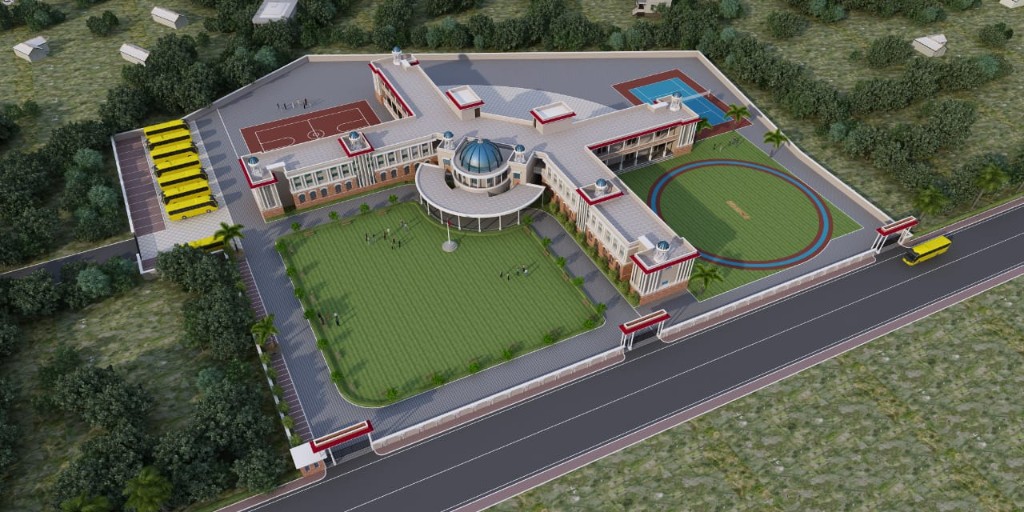
{{ s.body }}
Every student is placed in a house on the first morning and stays there until they graduate. Siblings are always placed together. Houses compete in sport, debate, music and — with real ferocity — the Founders' Day quiz.
Founded 1994. Holders of the Founders' Cup, three years running.
Founded 1994. Strongest in music; unbeaten in the choral competition since 2021.
Founded 2001. Runs the school's largest service programme, in four villages near Bhikangaon.
Founded 2009. Athletics champions, 2026.
Sixty-two clubs run each week. Every student in Classes VI–XII commits to one sport, one art and one service.
Select a marked day to read the entry. Term dates and the full calendar are posted each August.
{{ e.body }}
Three golds, two silvers and a bronze — the school's strongest showing since 2018.
A 400-seat auditorium and black-box studio, funded by the alumni appeal.
Ninety-eight percent placed at their first-choice university.
Average tenure nine years. Sixty-one percent hold a master's degree or doctorate in the subject they teach — not in education generally, but in their discipline.
M.Ed. and M.A. English, Devi Ahilya Vishwavidyalaya. At the school since 2009, Principal since 2014.
M.Sc. Mathematics, IIT Bombay. Leads curriculum design and the IB programme.
Twenty-two years teaching in Khargone and Indore; leads Classes IX to XII.
Your first point of contact, and the person who reads every application letter.
Six teaching posts and two house tutor roles are open for April 2027, across sciences, mathematics and music. Staff quarters on campus, transport, and a funded B.Ed. or M.Ed. programme are standard.
The Junior Gurukul Association is run by alumni, for alumni — and it pays for the scholarships that let the next cohort arrive.
Physician, Government Medical College Indore. Returns each February to teach the Class XI biology seminar.
Cinematographer. His first feature screened at MAMI Mumbai in 2025; he shot his first short in the school drama room.
Founder of a water-testing cooperative operating in ninety villages across Khargone district.
Every rupee given to the Fund goes to scholarships — no exceptions, no administrative deduction. Ninety-four percent of gifts are under ₹5,000, and they compound: a full place funded today is a graduate in twelve years.
Classes ending in 2 and 7. Dinner in the dining hall, a cricket match nobody takes seriously, and tours led by current students.
Three hundred and forty alumni advise Class XI and 12 students on universities, courses and first jobs. Two hours a term.
Four city chapters meet quarterly, with a fifth opening in Bengaluru this spring.
Visits run Tuesdays and Thursdays at 9:00, last about ninety minutes, and are led by two senior students rather than by the admissions office.
Received, thank you.
The office replies within two working days — sooner if you have asked about a visit date.
Junior Gurukul School
Education Park, Khargone Road
Bhikangaon 451331, Khargone (M.P.)
On the Khargone road, three kilometres from the Bhikangaon bus stand and fifty from Khargone. Sixteen buses serve three zones across the surrounding villages; visitor parking is inside the west gate.
Thank you — your enquiry is with us.
The admissions office replies within two working days, and your prospectus is already in the post.
A member of the admissions office will call you within two working days. No documents are needed at this stage.